



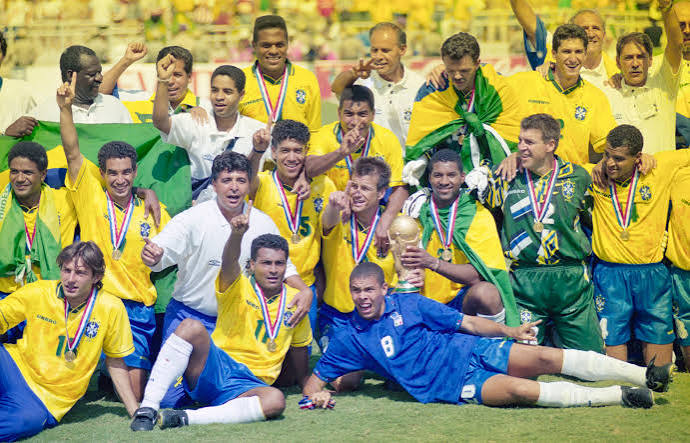
The 1994 World Cup in the United States is remembered less for a single iconic match and more for how it changed what watching football looked and felt like in a country new to the game. For modern viewers, revisiting USA ’94 offers a chance to see how massive crowds, summer conditions, and contrasting styles laid the groundwork for today’s American football culture and the way global tournaments are presented on screen.
Why USA 1994 Was Different from the First Kick
Held across nine large-capacity stadiums in the American summer, USA ’94 set attendance records that still stand, with more than 3.5 million spectators and an average close to 69,000 per game. For viewers, those full NFL-sized venues meant wide shots of huge, colourful crowds became a key part of the broadcast language, making every match feel like a major event even when the teams on the pitch were not traditional heavyweights.
How the U.S. Approach to Hosting Changed Match Presentation
American organisers leaned on their experience with large-scale sports events, focusing on stadium comfort, entertainment and TV‑friendly scheduling, which influenced how matches were presented globally. When you watch replays, you see early versions of what is now standard: slick broadcast graphics, choreographed pre‑game ceremonies, and production that treats each match as a standalone show within the larger tournament.
What the Heat and Conditions Did to Match Flow
Many matches were played in high temperatures and bright afternoon conditions, especially in venues like Dallas and Orlando, which directly affected tempo and pressing. For live viewers, this often meant intense early phases followed by slower, more measured middle periods as players managed fatigue, making it important to track how teams used substitutions and adjusted pressing height over 90 minutes.
If you rewatch USA ’94 games with this in mind, look at line height and sprint frequency in the final half-hour; teams that paced themselves and maintained structure in the heat were often the ones still able to mount coherent attacks or hold leads late on, despite overall running numbers dropping. That pattern is a useful reference whenever you watch tournaments in demanding climates today.
How Host-Nation Performances Looked Through a Live Viewer’s Eyes
The United States men’s team did not win the tournament, but their performances were central to how domestic viewers connected with the event. Matches like the Fourth of July round-of-16 game against Brazil drew roughly 11 million American TV viewers, and when you watch that game back, you see a U.S. side relying on compact shape, work rate, and transitions to stay competitive with technically superior opposition.
For viewers, the U.S. matches were an early lesson in how crowd energy and tactical discipline can keep an underdog close in knockout ดูบอลสดออนไลน์มือถือ โกลแดดดี้. You see long spells of defending in a low-to-mid block, selective pressing rather than constant pressure, and counter-attacking attempts that sometimes fall short in final-third quality—patterns that remain common for hosts or smaller nations in modern tournaments.
How Watching Live Helped Americans Learn the Game
For many in the U.S., USA ’94 was their first experience of following a full World Cup with multiple matches per day, and that learning happened by watching long stretches of live play, not just highlights. As fans tuned in, they were exposed to different tactical identities—defensive Italy, possession-minded sides, direct counter-attacking teams—which gradually taught them to recognise shapes, pressing cues, and momentum swings from one match to the next.
In that sense, every time people_stateside ดูบอลสด through an entire 90 minutes rather than only catching goal clips, they practiced reading off‑the‑ball movement, compactness, and chance quality, accelerating their understanding of why some 0–0s felt tense and high-level while others looked flat. That habit of watching full matches is one reason so many American fans later embraced data, tactics content, and more nuanced analysis around MLS and the national teams.
From Tournament Promise to MLS and Long-Term Growth
A key condition of hosting was a commitment to launch a new professional league, which became Major League Soccer in 1996, only two years after the tournament. As you connect USA ’94 matches to early MLS footage, you can see a gradual importing and adapting of tactical ideas: defensive structures influenced by European and South American coaches, evolving pressing schemes, and changing attitudes to possession that were seeded during the World Cup.
The tournament also sparked a surge in youth participation and broader cultural familiarity with the sport, giving future American players and coaches years of live World Cup viewing to draw on when interpreting shape, transitions, and spatial control. That viewing base is part of why, three decades later, the U.S. is preparing to co-host another World Cup with fans and analysts far more literate in tactical details than in 1994.
How USA 1994 Still Shapes the Way We Watch
Even outside the U.S., USA ’94 influenced later tournaments by demonstrating the commercial and broadcast potential of playing World Cup matches in large, modern stadiums aimed at TV audiences as much as in‑stadium supporters. Camera work, crowd shots, and the integration of pre‑ and post‑match shows set templates that future hosts refined, so when you watch more recent tournaments, you are seeing production techniques originally proven at scale in 1994.
For anyone studying football on screen, rewatching USA ’94 is a way to see the bridge between older, more stripped‑back coverage and the modern era of branded intros, data graphics, and carefully curated crowd imagery. It helps explain why today’s matches feel like full media events, and it underscores how a single World Cup can shift not just domestic interest, but the global standard for how the game is presented to viewers.
Summary
The 1994 World Cup in the United States did more than set attendance records; it created a new template for how football could be staged, broadcast, and learned from in a non‑traditional market. For modern viewers, understanding USA ’94—its heat, crowds, host-team tactics, and television style—adds depth to every World Cup you watch today, especially as the tournament returns to North America with a far more mature football culture than the one that first discovered the game in that record-breaking summer.