



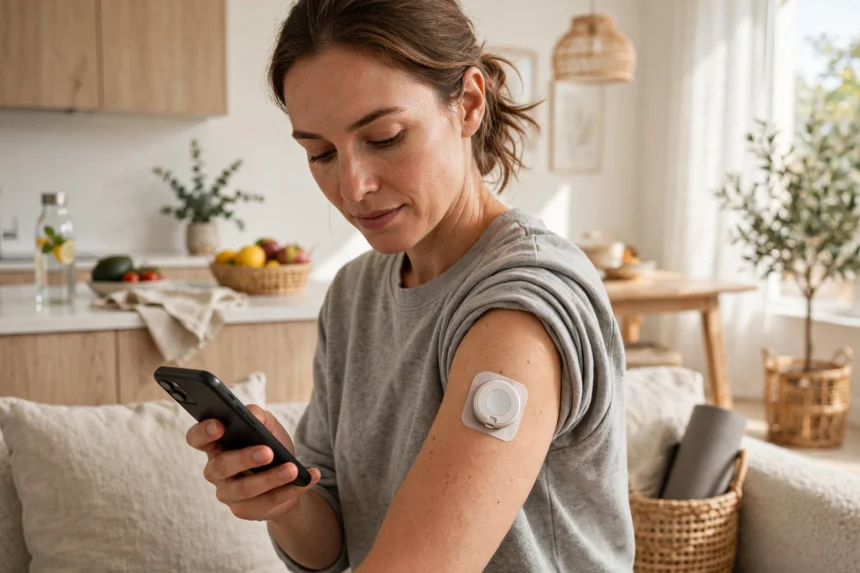
Continuous glucose monitors, the small wearable sensors long associated with insulin users, can make a real difference for a much wider group of people living with type 2 diabetes. In the largest clinical trial of its kind, published in the New England Journal of Medicine, adults with type 2 diabetes who do not use insulin spent approximately five more hours each day within their target blood sugar range when using the devices.
Why this trial matters
Type 2 diabetes affects hundreds of millions of people worldwide, yet most of them have historically managed the condition with little day-to-day information. A finger-prick test gives a single reading at a single moment. A continuous glucose monitor, worn on the arm or abdomen, reports levels every few minutes, building a picture of how meals, movement, sleep and stress push blood sugar up or down across the whole day.
Guidelines and insurance coverage have often reserved that technology for people on insulin, on the assumption that others would gain less from it. This trial challenges that assumption directly, because the participants were precisely the group usually left out: adults managing type 2 diabetes without insulin. The improvement, roughly five additional hours a day in range, is the kind of change clinicians link to better long-term outcomes and fewer complications.
Five more hours in range, explained
Time in range has become one of the most useful measures in diabetes care because it captures stability, not just averages. Two people can share the same average blood sugar while having completely different days, one steady and one swinging between highs and lows. Spending more hours in the target zone generally means fewer of those swings, and patients often say the feedback loop is what changes behaviour: when you can see a walk after dinner flatten a spike, the walk becomes a habit.
That visibility is the real intervention. The sensor does not treat anything by itself. It teaches, meal by meal, which foods spike an individual’s levels, which routines steady them, and where the problem moments of the day actually are. For many people, that personalised evidence is more motivating than general advice, however sound the advice is. The CDC’s diabetes resources similarly emphasise daily management habits, and monitoring is what makes those habits measurable.
What it could mean for everyday care
If the findings hold up in routine practice, the implications are practical as much as medical. Wider use of glucose monitors in type 2 diabetes could shift care earlier, helping people adjust diet, activity and medication before blood sugar control deteriorates enough to require insulin. It could also change the conversation between patients and doctors, replacing a single quarterly laboratory number with a shared, detailed record of daily life.
There are real obstacles. Sensors cost money, supplies are recurring, and coverage rules differ widely between health systems and insurers. There is also a human factor: some people find constant data empowering, while others find it stressful. Good care would mean offering the technology with proper support, not simply handing over a device. The trial strengthens the case for access, but how that access is funded will decide who actually benefits.
Technology is reshaping chronic care
The study fits a broader pattern in modern medicine, where wearable sensors are moving conditions once managed by occasional appointments into continuous, home-based care. Heart rhythm, blood pressure, sleep and now glucose are all becoming streams of data rather than snapshots. Used well, that shift gives patients agency. Used badly, it can overwhelm them, which is why the strongest results tend to come when devices are paired with clear guidance.
It also connects with the lifestyle side of health that readers here follow closely, from how people rest and travel to how they build healthier routines at home, themes we explored in the rise of staycations and holidaying close to home.
The bottom line
For adults with type 2 diabetes who do not use insulin, this is genuinely encouraging news backed by unusually strong evidence: a major trial, a respected journal and a benefit measured in hours of healthier blood sugar every single day. Anyone considering a glucose monitor should discuss it with their own clinician, who can judge suitability and interpret the data in context. But the direction of travel is clear. Diabetes care is becoming more personal, more continuous and more informed, and this study may be remembered as one of the moments that shift became impossible to ignore. Further reading is available from the New England Journal of Medicine, which published the trial.