



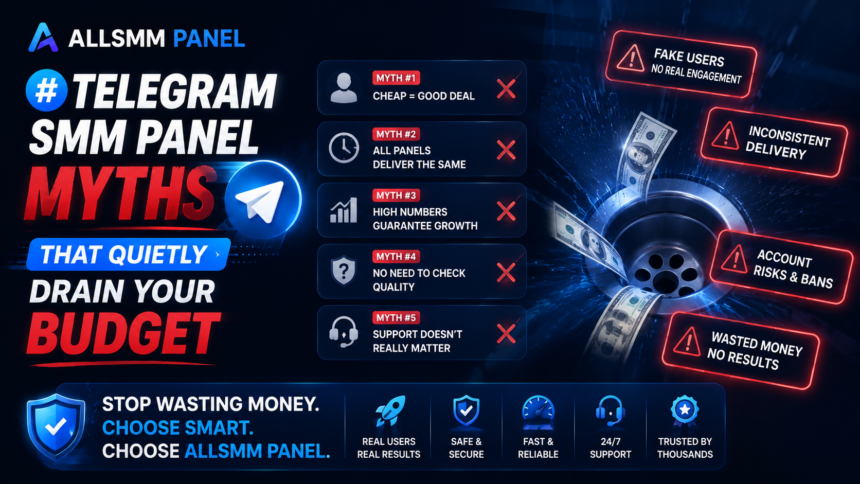
Half of what people believe about growing on Telegram is flat wrong, and the wrong beliefs are the expensive kind. They do not announce themselves. They just quietly cost you subscribers, margin, and the occasional client, and you blame bad luck instead of a bad assumption.
I have been reselling social services for years, and Telegram is where I saw the most confident people make the most costly mistakes. Myself included, early on. So instead of another walkthrough, let me take apart the myths I hear most, the ones that sound reasonable and turn out to be traps. Along the way I will point to what actually works, using a Telegram SMM Panel I have tested hard as the reference.
This is for resellers, agencies, and channel managers who move real volume. If you are boosting one personal channel with a single order, most of this will not apply to you.
Myth 1: cheaper is always the better deal
This is the big one, and it catches almost everyone at the start. The logic feels airtight. Lower price per thousand means more subscribers for your budget, so pick the cheapest option. Done.
Except Telegram breaks that logic. Cheap low-quality subscribers drop fast, and Telegram already has high natural drop because leaving a channel takes a single tap. So a bargain batch can shed 35 or 40 percent in the first week. Now you are refilling, paying again for what you already bought.
Run the numbers. One panel sells at $1.10 per thousand and drops 35 percent. Another sells at $1.50 and drops 8 percent. The “expensive” one is actually cheaper per subscriber that stays, and you spent less time firefighting refills. The real metric is cost per subscriber that sticks, not the sticker price. A genuinely good, affordable panel wins by keeping both the base price low AND the drop rate low, which is rare but not impossible.
Myth 2: faster delivery is always better
People love instant delivery. It feels like getting what you paid for immediately. On Telegram, it is often a mistake.
Telegram counts post views over time as people scroll back through a channel, and organic subscribers do not all appear in one minute. So a service that dumps ten thousand subscribers instantly produces a vertical spike followed by a flat line, which is the textbook signature of bought growth. Anyone glancing at the stats can read it.
What you actually want from a **fastest SMM panel Telegram** setup is a quick start with sensible pacing. The order should begin within minutes, because that gap between payment and visible movement is where clients panic. But the rest should roll out at a believable rate. Fast to begin, natural to finish. Speed at the start keeps clients calm. Pacing through the middle keeps the growth from looking fake.
Myth 3: subscribers are the only number that matters
Beginners obsess over the subscriber count because it is the most visible metric. It is also the most misleading one on Telegram.
A channel with 50,000 subscribers, zero reactions, and flat post views looks obviously fake, to real visitors and to the engagement signals Telegram does use to spread posts through shares. You bought a big trophy number and ended up with a dead-looking channel.
Real channels have balance. Subscribers, yes, but also views accumulating on each post and reactions spread across recent messages. When you only buy the headline number, you create a lopsided profile that screams inflation. The fix is to think in terms of a believable activity mix, which is exactly why service depth in a panel matters so much. If your source only sells subscribers, you cannot build that balance without juggling multiple providers.
Myth 4: all panels sell the same thing anyway
This one sounds cynical and worldly, so people believe it. It is wrong, and it is wrong in a way that costs money.
Yes, a lot of panels resell from the same upstream sources, which is why their service menus look identical. But that sameness is exactly the problem, not proof that quality is uniform. Those are middlemen, and every layer between you and the real source adds markup and a point of failure. When an order breaks three layers deep, nobody in the chain can fix it quickly.
The panels that actually differ are the ones closer to the source. They control the service, so they can guarantee refills, tune pacing, and answer technical questions properly. That is where quality and price genuinely diverge. A real provider running lean can be both cheaper and more reliable, because it is not stacking markups on someone else’s product. Testing a real Telegram SMM Panel against a marked-up reseller makes the difference obvious within two weeks.
Myth 5: buying growth will get your channel banned
This fear keeps a lot of people from ever trying, so let me address it honestly. The risk is real but it is misunderstood.
Channels get flagged when growth looks obviously fake. A massive instant spike, thousands of subscribers with zero engagement, views that appear faster than any human could scroll. Those patterns are the danger, not the concept of buying growth itself.
Quality sources with natural pacing avoid those patterns by design. Subscribers climb believably, views accumulate over time, reactions spread sensibly. The danger lives in the cheapest, lowest-quality services that dump everything at once. So the safe move is not “never buy,” it is “buy quality and pace it properly.” Test small first, watch how it behaves, then scale what looks natural.
Myth 6: support does not matter until something breaks
People treat support as an afterthought when comparing panels. Then an order stalls mid-campaign, a client is furious, and suddenly support is the only thing that matters.
Here is the trap. On a middleman panel, support has to escalate your problem up a chain, so a fix takes days. Meanwhile your client is refreshing the page and losing faith in you. Support quality is invisible right up until the moment you desperately need it, and then it decides whether you keep the client.
A provider that understands Telegram, and answers in an hour rather than three days, is worth more than a few cents off the base rate. I test this deliberately now. I open a ticket with a Telegram-specific question before I trust any panel with volume, because a rep who confuses a channel with a group is a rep who cannot help me when it counts.
What actually worked when I tested ALLSMM Panel
Enough myths. Here is what held up when I ran real orders, because I do not trust claims without testing them. Small deposit first, orders across the Telegram service types, then two weeks of watching what stuck.
The service range covered subscribers, post views, and reactions in one place, wider than most budget panels bother with, so I could build that balanced activity mix without hopping between providers. Orders started in minutes and held speed when I tested during a busy Friday window, not just a quiet morning. Pacing was sensible, with views trickling up and subscribers climbing believably rather than spiking.
Retention was the part I cared about most, and it was modest and predictable across two weeks. Predictable is the word that matters, because it lets me forecast refills and price a campaign without guessing. Support answered a platform-specific question quickly and actually understood it. And the pricing sat on the low end without the usual penalties, which is the pattern you expect from a real source rather than a marked-up reseller. That combination is why ALLSMM Panel ended up as my reference point for what a smm panel Telegram should do.
A real example
I manage growth for a few niche tech and crypto channels, the kind of B2B audience that spots anything fake instantly. One client wanted a full launch. A steady subscriber base over several days, post views accumulating naturally on each new post through the first week, and a light spread of reactions so the channel read as genuinely active.
I paced the subscribers over several days, layered the views to climb over time, and added measured reactions. The order started within the hour, which kept the client calm, and two weeks later the counts were still steady with the engagement ratio holding. One view order lagged slightly behind the headline services but completed fine. Speed varies by service in any panel, and I would rather know that than be surprised.
How to test any panel and skip the myths entirely
Do not take my word for any of this, including the parts where I say nice things. Run the test yourself. Two weeks of light attention settles every myth above with real data.
1. Deposit the minimum. Ten or twenty dollars tells you what you need before risking client money.
2. Order across the service types you sell. Subscribers, views, reactions. Quality varies between them even in one panel.
3. Time the start and test under load. Note how fast activity appears, and try a busy Friday, not a quiet morning.
4. Ask support a hard, Telegram-specific question. Judge how fast and how knowledgeable the reply is.
5. Check retention at day 7 and day 14. That drop number is your true cost and it decides whether the panel is worth scaling.
Pass all five and you can scale with confidence. Fail on retention, load, or support and walk away, no matter how low the price looks.
Who should actually care about all this
Be honest about where you sit, because not every myth applies to every buyer.
– Resellers and agencies moving steady volume gain the most, since these mistakes compound across every order.
– Channel managers running multiple clients need balanced activity and predictable drops to keep campaigns clean.
– Founders building a reseller panel on an API want a stable source underneath, not a middleman.
– Casual users placing one small order do not need to overthink any of this. Grab something simple and move on.
FAQ
Is the cheapest Telegram SMM panel always a bad choice?
Not automatically, but the cheapest sticker price often hides high drops and slow support. On Telegram those costs compound fast. Measure cost per subscriber that actually stays, not the advertised price per thousand.
Is faster delivery better on Telegram?
Only at the start. You want activity to begin within minutes so clients stay calm, then paced naturally afterward. Instant delivery of everything at once looks fake and can flag a channel, so a quick start with sensible pacing is the goal.
Will buying growth get my channel banned?
The risk comes from fake-looking patterns, not the concept itself. Massive instant spikes with zero engagement are the danger. Quality sources with natural pacing avoid that, so buy quality, pace it, and test small first.
Do reactions and views really matter, or just subscribers?
They matter a lot. A big subscriber count with flat views and no reactions reads as fake to both visitors and Telegram’s engagement signals. A balanced activity mix is what makes a channel look genuinely alive.
Why is support worth paying attention to?
Because when an order stalls mid-campaign, support is the only thing standing between you and an angry client. Middlemen escalate up a chain and take days. A real provider that understands Telegram fixes things in hours.
How do I know a panel is a real provider and not a middleman?
Ask support a specific technical question and watch how they answer. Real sources know their service. Also check whether prices only ever climb and whether refills are actually honored, since middlemen cannot guarantee what they do not control.