



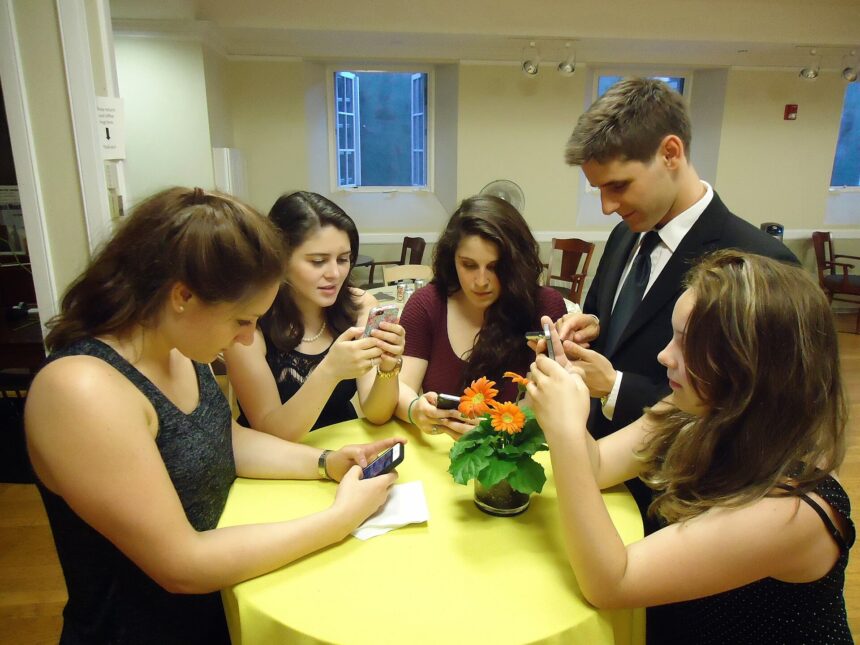
Ask a room of adults whether short-form video has damaged their attention and most hands go up. Ask psychologists what the evidence shows and the answer is more careful — and more interesting. The claim that platforms like TikTok and Reels have rewired the brain’s basic capacity for concentration is not what the studies find. What they find instead is a tangle of habits, expectations and self-perception that deserves a closer look, because the remedies differ depending on which is true.
Start with the strongest evidence. Large studies measuring actual attention performance — sustained-attention tasks, working-memory tests — find weak or inconsistent differences between heavy and light short-video users. Where heavy users do stand out is in self-report: they say their attention is worse, they mind-wander more during lectures and meetings, and they check their phones more compulsively. Researchers call this the attention-complaint gap, and it mirrors what our reporting on digital habits has found repeatedly: the felt experience is real even where the cognitive deficit is not.
Task-Switching, Not Brain Damage
The mechanism psychologists take most seriously is mundane: short video trains an expectation of novelty. A feed that delivers something new every fifteen seconds makes a fifty-minute task feel comparatively unrewarding, so the mind proposes switching — and the phone is always there to agree. This is a habit loop, not neurological injury, and habit loops are changeable. Laboratory work on “attention residue” shows the cost is in the switching itself: every check leaves part of the mind on the previous stimulus, and performance on the main task dips for minutes afterwards.
There is also a displacement story. Hours given to feeds are hours taken from sleep, reading and boredom — and boredom, unglamorous as it sounds, is when the brain consolidates and creates. Studies synthesised by the American Psychological Association link late-night scrolling more robustly to poor sleep than to any direct attention effect, and poor sleep then degrades next-day attention in a way that feels exactly like a shortened span.
Who Is Actually at Risk
The research does identify a group for concern: adolescents whose use is compulsive — who cannot stop despite intending to, and whose use displaces sleep, schoolwork and face-to-face time. For this group, correlations with anxiety, low mood and attention problems are consistent across studies, though the direction of causation remains debated: struggling teenagers may retreat into feeds as much as feeds create the struggle.
For typical adults, the same literature offers a measure of reassurance — the brain’s attentional machinery appears intact, and people who take structured breaks from short video report their concentration recovering within weeks. The capacity was never lost; it was outbid.
What Works, According to the Evidence
The interventions with actual support are boring and effective: keeping the phone out of the bedroom, which repairs sleep and with it next-day attention; single-tasking in timed blocks with the feed apps logged out or deleted, raising the friction of the switch; and replacing, rather than merely removing, the micro-breaks — a walk, a window, a conversation. Willpower-based resolutions (“just scroll less”) are the approach with the weakest record, in this literature as in most.
The Bottom Line
Short video probably has not shrunk your attention span. It has trained your expectations, eaten your boredom and, if you let it, your sleep — which amounts to a similar daily experience through a different, more fixable route. That distinction between damage and habit is the most useful thing the research offers, and it echoes the theme of our look at longevity clinics: in both cases, the honest science is less dramatic than the marketing — and more useful.