



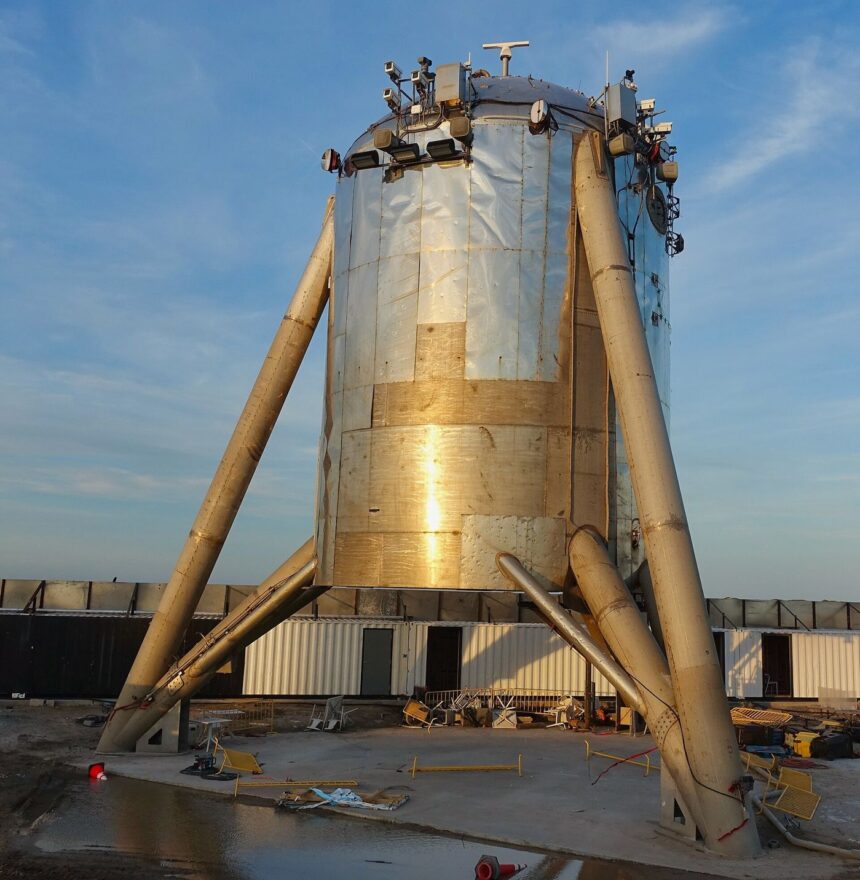
SpaceX has caught its Starship spacecraft out of the sky for the first time, completing a milestone in its drive to build a fully reusable rocket. The 124-metre Starship lifted off from Starbase in Texas on 13 November 2026 for its 15th test flight, the most ambitious yet. Minutes after liftoff the Super Heavy booster developed a problem on its way back to the pad, forcing SpaceX to divert it to the Gulf of Mexico, where it exploded. The Starship upper stage pressed on into orbit, deployed 26 next-generation Starlink V3 satellites, and circled Earth 14 times over about 22 hours. On 14 November it fired its engines, flipped vertical and descended into the arms of the launch tower, which caught the 52-metre spacecraft in midair.
What the Evidence Shows
The flight was designed as a first attempt at a double catch, recovering both the booster and the ship at the launch tower, and only half of that plan succeeded. SpaceX said the booster received a fuel shortage warning during its return, which forced the catch attempt to be cancelled. The ship catch matters more for the long term, because it proves a spacecraft can return from orbit and be recovered without landing legs or a splashdown in the ocean. SpaceX now builds a new Starship about every two weeks and a booster about every four weeks, and it plans to start launching Starships from Florida within a few months. The company sees the vehicle as the workhorse for its Starlink business, for returning people to the Moon and eventually for settling on Mars. Reporting and analysis from sources such as IEEE Spectrum track the same developments, and specialists following Starship Flight 15 say the direction is now consistent across independent lines of evidence.
The Wider Context
Adoption of Starship Flight 15 follows a familiar pattern with an unfamiliar speed. Early users tolerate rough edges in exchange for advantage, mainstream users arrive when the tool disappears into existing workflows, and the market consolidates around whoever made that transition feel effortless. Vendors are racing less on raw performance now than on integration, support and trust.
What Happens Next
The realistic forecast for Starship Flight 15 is steady integration rather than sudden replacement: embedded in products people already use, improving in increments, and regulated in proportion to its reach. The companies and institutions that plan on that basis, training staff and redesigning processes instead of chasing launches, are the ones the adoption data tends to vindicate. You can follow related developments in our coverage of technology.
It is also worth remembering how quickly the picture in this area has changed before. Positions that looked settled a few years ago have been revised as new data arrived, and the same humility is appropriate now. The strongest coverage of this subject, and the most useful advice, tends to come from sources that update their views openly when the facts move, rather than defending an earlier position long after it has stopped fitting the evidence available.