



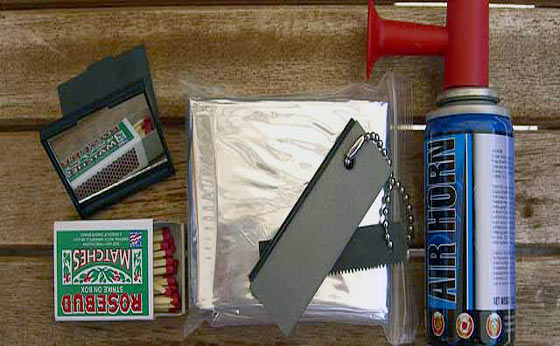
Getting lost outdoors happens to careful, experienced hikers just as often as it happens to beginners. A missed trail marker, a sudden fog, or a wrong turn at dusk can turn a routine hike into a night spent wondering which direction leads back to the trailhead. What separates a scary story from a real emergency often comes down to one skill: knowing how to signal for help effectively.
Wandering in circles trying to find your own way back is usually the wrong move once you realize you’re lost. Search and rescue teams are trained to look for signals, not footprints, and the faster you can be seen or heard, the faster your ordeal ends.
Why Signaling Matters More Than Walking
The instinct to keep moving when lost is powerful, but it works against you more often than it helps. Every step you take after realizing you’re lost expands the search area rescuers have to cover, and it increases the odds you’ll end up somewhere even harder to find.
The moment you accept that you’re lost, your priority should shift from finding the trail to being found. That means staying in a visible, reasonably accessible spot and doing everything you can to make yourself known.
The Universal Distress Signal
Search and rescue protocol across most of the world uses a simple rule: three of anything means distress. Three whistle blasts, three fires, three gunshots, or three flashes of light all signal the same thing to anyone trained to look for it.
This three-signal pattern exists because it is unmistakably intentional. A single sound or flash could be random, but a consistent group of three repeated at intervals tells a searcher that a person, not nature, is creating the signal.
Visual Signals You Can Use
If you have bright clothing or gear, lay it out in an open area where it contrasts with the surrounding terrain, since aircraft and drones scan for color patterns that don’t belong in a natural landscape. A signal mirror, or even a phone screen or the reflective back of a snack wrapper, can flash sunlight for miles under the right conditions.
Ground-to-air signals work well if you’re stuck in one place for a while. Stomping a large X or SOS into snow, arranging rocks or branches into a giant triangle, or laying logs across an open clearing all catch the eye of anyone flying overhead.
Sound Signals: Why Your Voice Isn’t Enough
Shouting feels like the natural response, but the human voice doesn’t carry nearly as far as most people expect, especially through dense trees, wind, or rugged terrain. A sharp, high-pitched whistle travels much farther than a shout and takes far less energy to produce repeatedly over hours.
If you don’t have a whistle in your pack, and plenty of hikers forget one, your hands can do the job. Learning how to whistle with your fingers is one of those skills that costs nothing, takes up no space in your bag, and can be genuinely loud enough to carry across a valley when you need it most.
Using a Whistle Correctly
A whistle, whether it’s a piece of gear or your own fingers, works best used in the standard three-blast pattern, paused, then repeated every few minutes. Constant blowing wastes energy and can blur into background noise, while a clear, spaced-out pattern is far more likely to catch a searcher’s attention.
Save your energy between signals rather than blowing continuously. A tired signaler who can keep going for hours beats an exhausted one who burns out in the first thirty minutes.
Signal Fires and Smoke
A well-built fire is one of the most effective signals available, especially at night when the glow can be seen from a considerable distance. During the day, adding green leaves, damp wood, or synthetic materials to a hot fire produces thick smoke that stands out clearly against open sky.
Prepare three separate fire sites in a triangle formation if your situation allows it, since three columns of smoke are recognized worldwide as a distress pattern rather than an accidental brush fire.
Electronic Signals: PLBs and Satellite Messengers
A personal locator beacon or satellite messenger is the single most reliable tool for serious backcountry travel, sending your exact GPS coordinates directly to search and rescue with the press of a button. These devices work in areas with zero cell signal and have genuinely saved lives in remote terrain where visual or sound signals would never have been spotted in time.
They aren’t a replacement for basic signaling knowledge, though, since batteries die and devices get lost or damaged. Knowing the manual methods means you’re never entirely dependent on electronics.
What to Do While You Wait
Once you’ve signaled and settled into a visible spot, focus on staying warm, hydrated, and calm rather than continuing to search for the trail yourself. Repeat your signals at regular intervals, conserve your energy, and keep your signal materials, mirror, bright clothing, or fire, ready to activate the moment you hear or see a search party.
Common Mistakes That Delay Rescue
Continuing to move after dark, hiding from search aircraft out of embarrassment, and failing to tell anyone your planned route before you left are three of the most common reasons searches take longer than they should. Simple preparation before you ever leave the trailhead solves most of this.
Another common mistake is signaling inconsistently. A single shout or one flash of a mirror is easy for a search team to write off as a trick of the light or an animal sound. Sticking to the three-signal pattern, repeated at regular intervals, removes that doubt and tells anyone listening or watching that a person is deliberately trying to be found.
Preparing Before You Ever Leave the Trailhead
Most of what makes a lost-hiker situation resolve quickly happens before the hike even starts. Telling a friend or family member your route and expected return time means someone will notice and act if you don’t check in, often well before you would have run into serious trouble on your own.
Packing a whistle, a signal mirror, and a headlamp with fresh batteries costs very little in weight or space, but it means you’re never relying purely on luck or your voice if things go wrong. Check that everything still works before each trip rather than assuming gear from last season is ready to go.
Why Practicing These Skills Beforehand Matters
Reading about a three-blast whistle pattern is very different from actually doing it under stress, cold, and fading light. Spend a few minutes on a practice hike actually using your whistle, trying a signal mirror in the sun, or laying out a ground signal so the motion feels familiar rather than foreign if you ever genuinely need it.
The same goes for a hands-free signal like a finger whistle. It takes a few tries to get a clean, loud sound, and testing it at home means you already know it works instead of discovering it doesn’t in the one moment it actually matters.
Bottom Line
Being lost outdoors is frightening, but it doesn’t have to be dangerous if you know how to make yourself found. Learn the universal signals, carry a whistle when you can, and know how to improvise one when you can’t. The combination of preparation and a level head is what actually brings people home safely.